Global Headquarters
No. 398, Xinhu 1st Rd, Neihu District, Taipei City, 114, Taiwan
Cooler Master V Series
One As Two.
The numbers tell the story

V8 ACE 3DHP 137 × 139 × 168 mm
Benchmark Dual-Tower Competitor 150 × 152 × 168 mm

V8 ACE 3DHP 1169 g
Benchmark Dual-Tower Competitor 1525 g
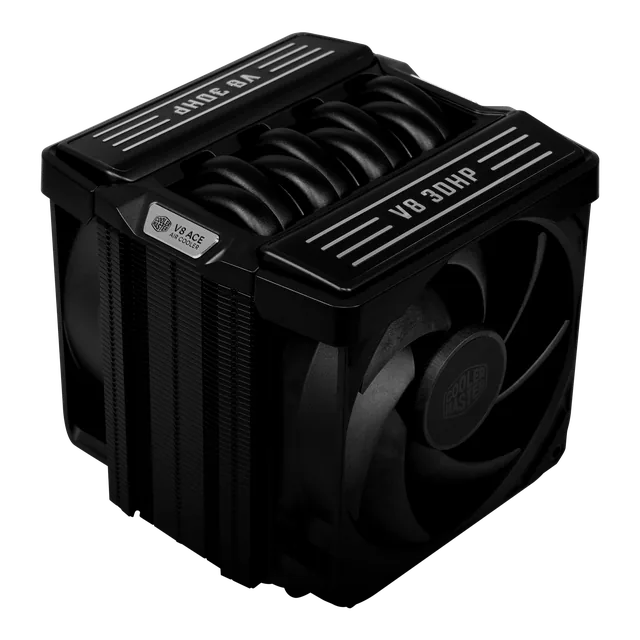
Overview
Cooling performance doesn’t always require a second tower.
It comes from understanding how heat moves.
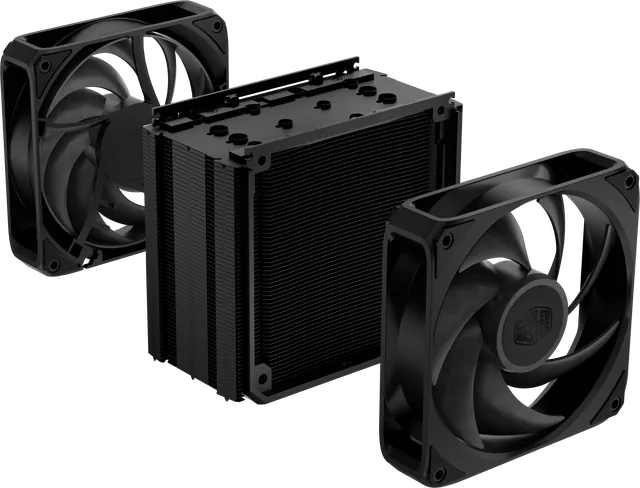
The V8 ACE 3DHP combines patented 3D Heat Pipe technology (3DHP), SCCHP heat pipes, and dual 30 mm fans into a thermal system engineered to maximize cooling performance in a single-tower design.

2× 3DHP + 4× SCCHP heat pipes move and spread heat more efficiently.

Dual 120 × 30 mm fans maintain airflow through dense fin stacks.

Separate AMD and Intel designs optimize cooling for each platform.

Ranked the #1 single-tower AMD air cooler by independent lab Cybenetics.
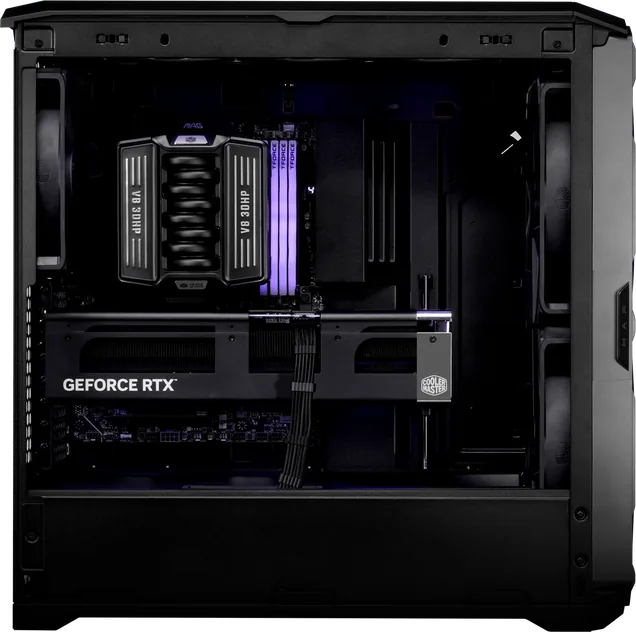
R&D
Every part of the V8 ACE 3DHP is designed around one goal: managing heat more effectively. Follow the path from heat pickup to heat dissipation to see how each component contributes to One As Two.
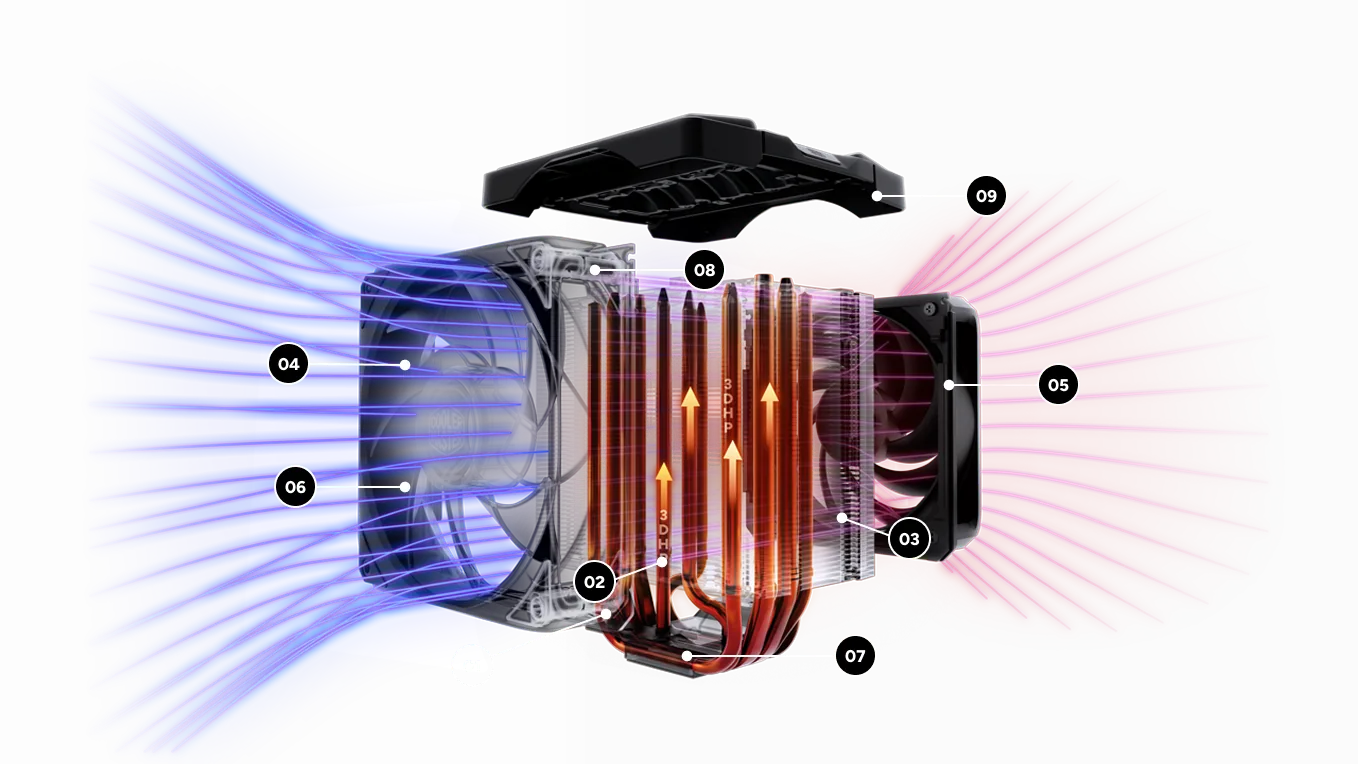

01 / Heat Pickup
The third branch reaches the CPU hotspot, capturing heat a standard U-shaped heat pipe can miss.

02 / Heat Distribution
Two 3DHP and four SCCHP heat pipes spread heat across more of the fin stack.

03 / Heat Dissipation
A larger effective cooling surface gives moving air more heat to carry away.

04 / Intake Airflow
A 120 × 30 mm fan pushes cool air deep into the dense fin stack.

05 / Exhaust Airflow
A second 120 × 30 mm fan pulls heated air completely through the heatsink.

06 / Blade Stability
Liquid crystal polymer blades resist flex, helping maintain stable airflow at higher speeds.

07 / Platform Optimization
The base geometry and heatpipe tuning are optimized separately for Intel and AMD processors.
08 / Easy Installation
Slide the fan clips instead of removing them, supporting memory modules up to 45 mm tall.
09 / V8 Design
A bold industrial design inspired by the mechanical character of a V8 engine.
Proof
Cybenetics-Tested Performance
Independent testing ranked the V8 ACE 3DHP AMD second overall among every air cooler tested, including larger dual-tower designs.
Highest-ranked single-tower AMD air cooler in the tested Cybenetics database.
Second overall among every air cooler tested, including larger dual-tower designs.
 Full-Speed Testing
Evaluated under controlled full-speed testing to measure maximum cooling performance.
 Independent Lab
Results verified by Cybenetics, an independent hardware testing and certification laboratory.
3DHP
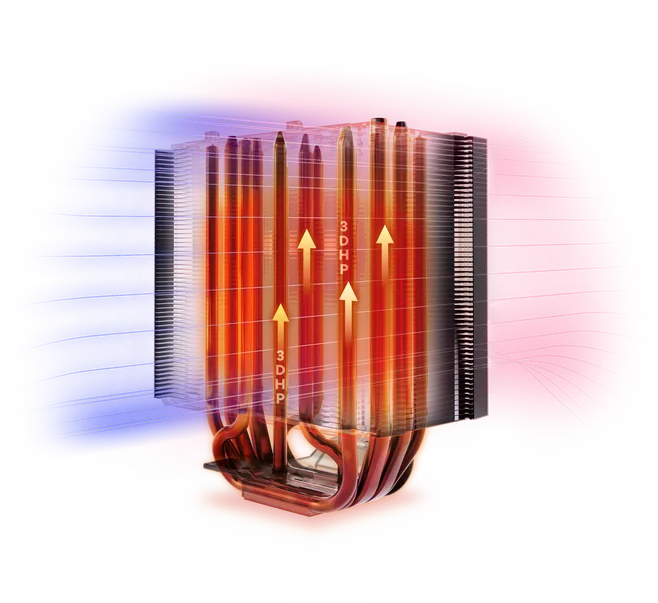
Conventional U-shaped heat pipes move heat through two ends. Patented 3DHP technology adds a third branch that reaches the CPU hotspot, creating an additional path for heat to move into the cooler.

Targets the CPU hotspot with an additional heat path.

Creates a third branch without adding another full heat pipe.

Improves circulation back to the base for more efficient heat transfer.
Hybrid Heatpipe Architecture
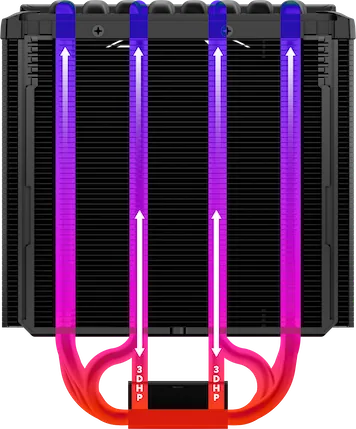
Two patented 3DHP heatpipes capture heat at the CPU hotspot. Four SCCHP heatpipes distribute it across the fin stack. Together, they create a unified thermal system.
CPU hotspot → hybrid pipe network → fin stack → airflow
Each stage is tuned to keep heat moving away from the processor instead of building up in one part of the cooler.
Higher Fin Utilization
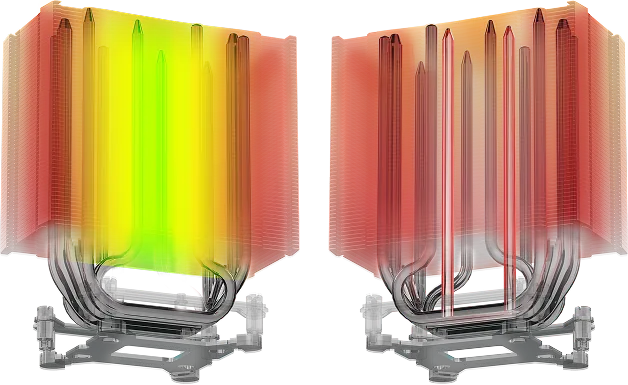
Traditional heatpipe layouts concentrate heat in a smaller area of the heatsink. The hybrid 3DHP architecture spreads heat farther across the fin stack, allowing more of the cooler to participate in heat dissipation.

Up from roughly 70% in a conventional layout, based on Cooler Master internal testing.

Heat is distributed more evenly across the fin stack instead of remaining concentrated near the center.

More active cooling surface helps maintain performance during extended workloads.
Airflow
The front and rear fans are engineered for different airflow roles. One builds pressure to push cool air through the heatsink. The other efficiently pulls heated air away. Together, they maximize cooling performance while helping reduce unwanted noise.
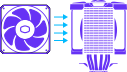
Up to 2500 RPM to build pressure through the dense fin stack.
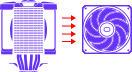
Up to 2050 RPM to pull heated air through the cooler while maintaining a clean visible face.

Different operating speeds help reduce harmonic noise between the two fans.
LCP Blade Stability
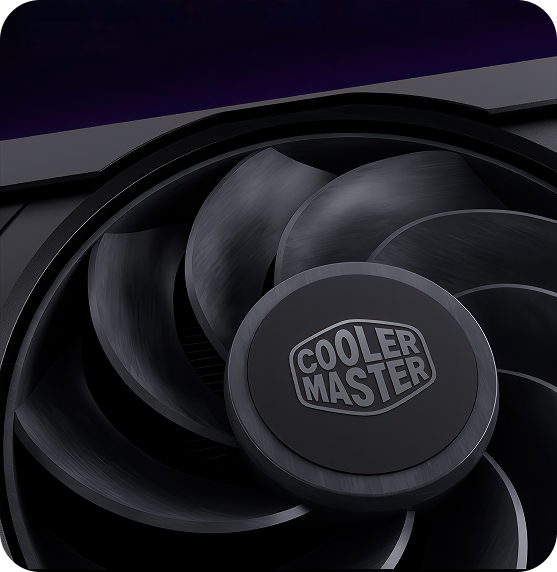
Liquid Crystal Polymer provides twice the structural strength needed to resist blade deformation and vibration at higher speeds. That stability maintains tighter tip clearance, reducing air leakage and supporting stronger static pressure.

LCP blades resist flex and vibration at high fan speeds.

Less blade flex reduces air leakage at the blade tips.

Designed for smooth operation and long-term durability.
Platform
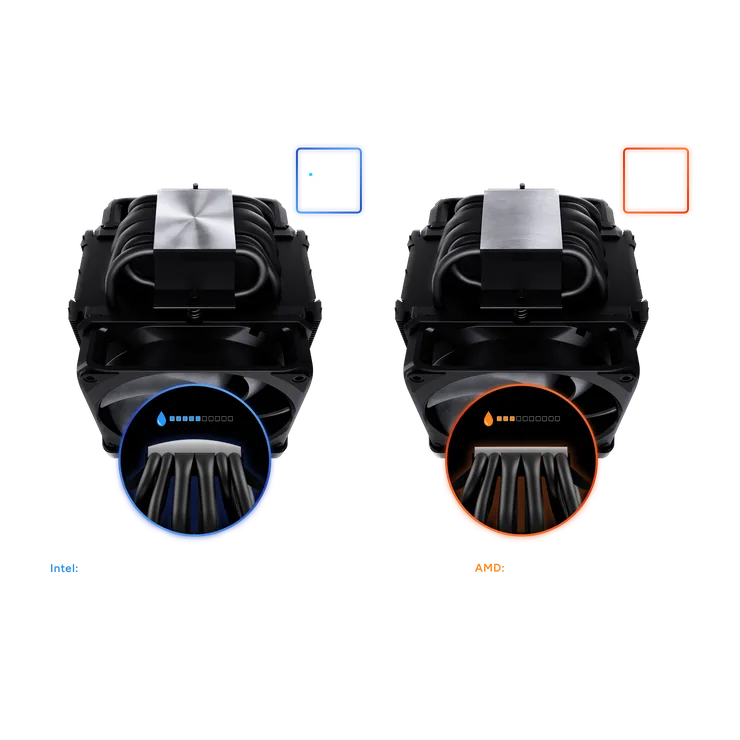
Intel and AMD processors don’t generate or transfer heat the same way. Separate V8 ACE 3DHP models tailor the base geometry, heatpipe design, and thermal capacity to the platform they are built to cool.

Matches the bowed surface common to Intel desktop processors for more complete contact.

Matches the flatter AM4 and AM5 heat spreader for more even contact.

Each heatpipe network is optimized for the thermal characteristics of its platform.
Compact Footprint
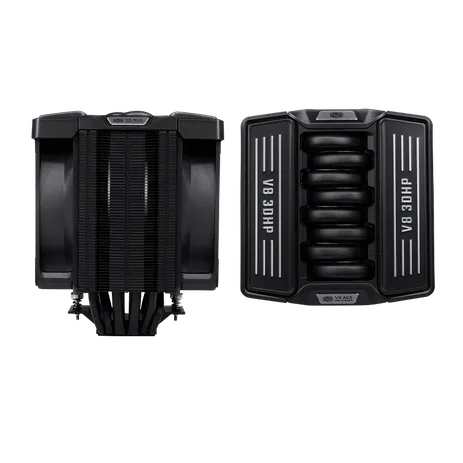
The V8 ACE 3DHP delivers the cooling performance of much larger air coolers in a compact single-tower design. That leaves more room around the CPU socket for memory, motherboard components, and future upgrades without sacrificing thermal headroom.

Sliding side fans provide clearance for memory modules up to 45 mm tall without removing the fan clips.

The compact heatsink leaves more space around the CPU socket, making building, upgrades, and maintenance easier.

Delivers high-end cooling in a single-tower design that fits a wider range of systems than larger dual-tower coolers.
Acoustic Control
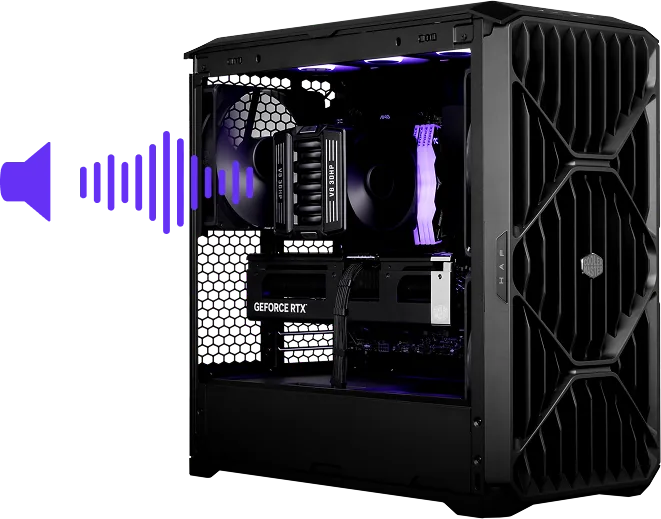
Two fans running at the same speed can reinforce the same frequencies and create unwanted resonance. The V8 ACE 3DHP offsets front and rear fan speeds to reduce harmonic resonance while maintaining strong airflow.

Higher speed builds the static pressure needed to push air through the fin stack.

Lower speed efficiently removes heated air from the cooler.

Different maximum speeds help reduce harmonic resonance between the fans.
Specs
The Intel and AMD models share the same cooling architecture, fan system, and overall design. Platform-specific base geometry, 3DHP heatpipe design, and thermal capacity are optimized for how each processor transfers heat.
| Spec | AMD Model | Intel Model |
|---|---|---|
| Platform Support | AMD AM5 / AM4 | Intel LGA 1851 / 1700 / 1200 / 1151 / 1150 / 1155 / 1156 |
| Base Geometry | Flat base for AMD AM5 / AM4 processors | Convex base for Intel LGA1700 / LGA1851 processor bow |
| 3DHP Q-Max Tuning | 70 W target per 3DHP | 90 W target per 3DHP |
| Dimensions |
138.95 × 136.47 × 167.3 mm
|
|
| Heat Sink Material |
2 × 3DHP / 4 × SCCHP / Aluminum Fins
|
|
| Front Fan |
120 × 120 × 30 mm, 0–2500 ±250 RPM, 89.6 CFM, 3.85 mmH₂O, 37 dB(A)
|
|
| Rear Fan |
120 × 120 × 30 mm, 0–2050 ±250 RPM, 61.0 CFM, 2.0 mmH₂O, 34 dB(A)
|
|
| Bearing |
Loop Dynamic Bearing
|
|
| Warranty |
6 Years
|
|